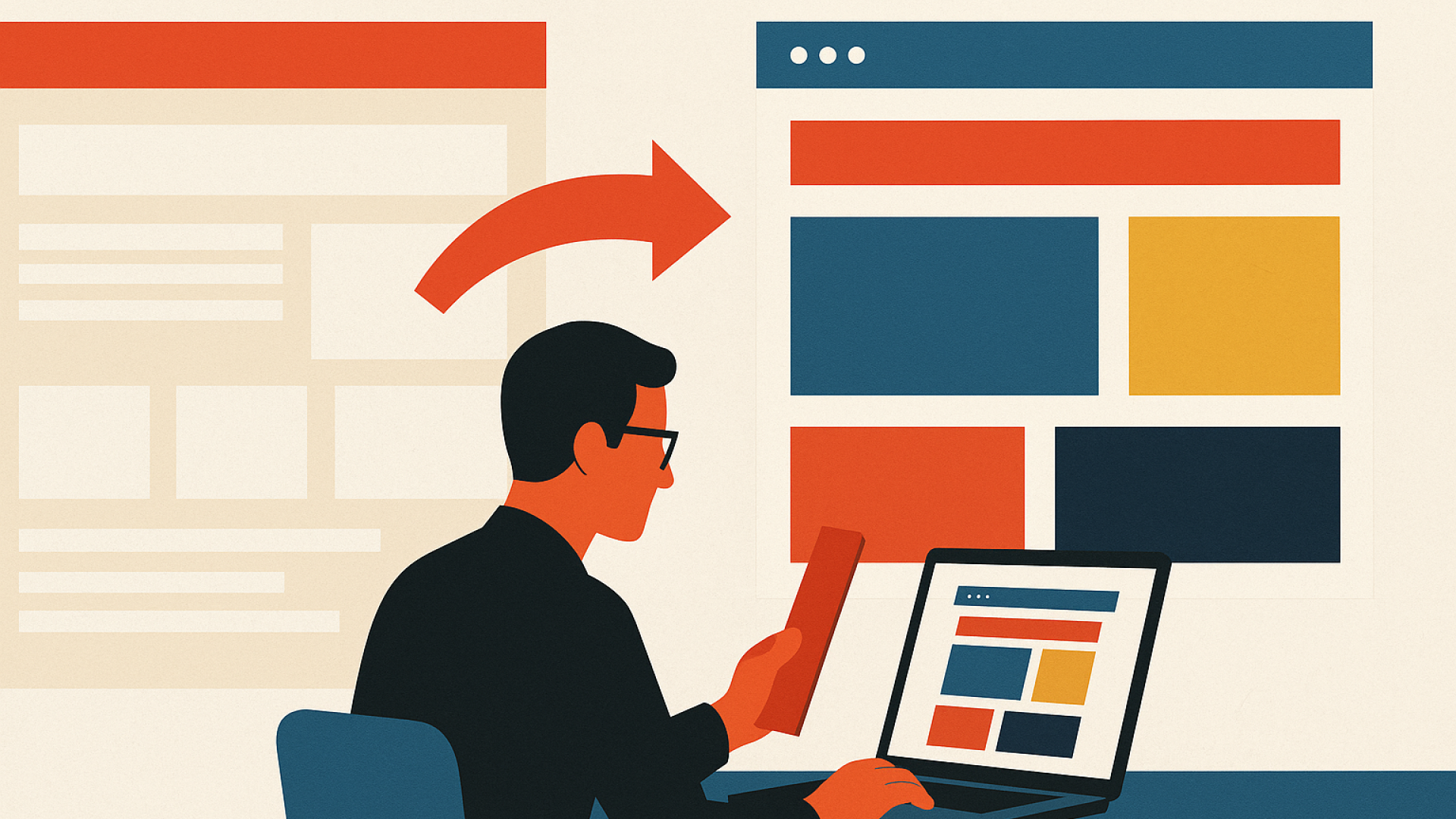
But if the only goal is looking nice, the results will always be cosmetic.
Problem
A redesign without clear business goals is like changing your store layout without knowing whether you want to:
- sell more wine,
- upsell to premium bottles,
- or reduce checkout lines.
Companies spend months and millions chasing a trend. Yet after launch, they can’t point to a measurable improvement in performance.
Performance-Driven Design Connection
This is where Performance-Driven Design makes the difference. Instead of starting with aesthetics, you start with your metrics-chain:
- Business KPI → What do we want to achieve? (conversion, retention, CLV, CAC payback)
- Product / Journey KPI → Which part of the funnel do we influence? (sign-ups, average order value, repeat purchase rate)
- UX / Design KPI → What change in user behavior do we need? (guided selling clicks, simplified checkout, loyalty sign-up)
- Design Change → Which design action enables it? (new layout, nudges, streamlined form)
With this chain, the redesign is no longer a beauty contest — it’s a business lever.
Example
Take an e-commerce brand considering a “new modern look.”
With PDD, you’d first map the metrics-chain:
- Business KPI → Increase Customer Lifetime Value
- Product KPI → Improve repeat purchase rate
- UX KPI → Get more customers to sign up for the loyalty program at checkout
- Design Change → Redesign checkout to highlight loyalty benefits and make joining frictionless
Now your redesign is laser-focused on growing CLV, not just refreshing visuals.
Takeaway
Redesigns without goals are expensive detours.
Redesigns anchored in a metrics-chain become growth strategies.
If your next redesign is coming up, ask yourself:
👉 Which KPI am I really trying to move?
That one question can save you months of wasted effort — and turn design into a measurable driver of growth.